If you’re a small business owner in Vermont, chances are you’ve thought about digital advertising… and then immediately decided it sounded too expensive, too confusing, or too risky.
We get it.
The good news? You don’t need a massive budget or a fancy agency to make digital ads work. In fact, Vermont’s smaller, more localized markets can actually work in your favor if you approach advertising the right way.
This post breaks down what actually works on a small budget, and what you can safely skip.
You Don’t Need a Huge Budget to See Results
There’s a myth that digital advertising is only for big brands with deep pockets. But for small businesses, advertising is less about volume and more about precision.
When you’re advertising to locals who already need what you offer, even a modest budget can go a long way.
Think consistent and targeted, not flashy or nationwide.
What “Small Budget” Really Means
For most Vermont small businesses, a “small budget” usually looks like:
- $100–$300 per month if you’re just getting started
- $300–$500 per month if you want steadier results
What matters most isn’t the exact dollar amount, but how focused that money is.
A common mistake is spreading a small budget across too many platforms at once. A little money on Facebook, a little on Google, a little on Instagram… and suddenly nothing works well enough to tell what’s actually helping (if anything).
Start with one platform, one goal, and one clear message.
Start Local Before You Spend a Dime
Before you run a single ad, make sure your basics are solid. Digital ads work much better when people can quickly see that you’re a real, local business.
At a minimum:
- Your Google Business Profile should be claimed, updated, and have accurate contact information.
- Your website should clearly show:
- What you do
- Where you’re located
- How to contact you
Trust matters, especially here in the Green Mountain State. People want to know you’re nearby, legitimate, and easy to reach. Ads don’t replace that. They amplify it.
The Best Ad Platforms for Small Budgets
Facebook & Instagram Ads (Great Place to Start)
For many local businesses, Facebook and Instagram are the easiest and most forgiving platforms to begin with.
Why they work well:
- You can target people by location, interests, and age
- Visual content performs well (especially local photos)
- Budgets are flexible and easy to control (no surprises when you get your credit card statement)
Simple campaigns that tend to work:
- Boosting a strong post that’s already getting engagement
- Local awareness ads targeting people within a few towns
- Ads promoting a seasonal service or a limited-time offer
Keep targeting tight. You don’t need to reach all of New England, or even the entire state, just the people who are realistically going to walk through your door or book your service.
Google Search Ads (Use Carefully)
Google Ads can work very well when used narrowly.
They tend to be best for:
- Service-based businesses
- High-intent searches like:
- “plumber near Middlebury”
- “Vermont wedding florist”
- “Vergennes snow removal”
What usually doesn’t work on small budgets:
- Broad keywords
- Display ads
- Competing with national brands
If you use Google Ads, focus on specific services + town names. There may be fewer clicks, but those clicks will often lead to sales.
What You Should Actually Advertise
One of the biggest mistakes small businesses make is trying to advertise everything at once.
Instead, pick one clear thing:
- A specific service
- A best-selling product
- A seasonal offering
- An event or promotion
Vermont businesses are especially seasonal, which is a huge advantage if you lean into it.
Examples:
- “Book your fall foliage stay”
- “Get those snow tires on before the first big storm”
- “Vermont maple syrup makes the perfect stocking stuffer”
- “Summers are better on Lake Champlain”
Clear, timely, and relevant messaging beats generic every time.
A Simple Budget Breakdown That Makes Sense
Here’s a realistic way to think about a small monthly ad budget:
- 70% on your main platform (Facebook or Google)
- 20% testing a second option or variation
- 10% boosting whatever is performing best
This approach lets you learn without gambling the whole budget on guesswork.
How to Tell If Your Ads Are Working
You don’t need fancy dashboards or complex analytics to measure success.
Focus on:
- Website visits
- Calls
- Messages
- Form submissions
If people are reaching out, asking questions, or booking services, that’s working.
Try not to obsess over:
- Likes
- Follower counts
- Impressions alone
Those can feel good, but they don’t pay the bills.
Also, give ads time. A week isn’t enough. Let them run for at least 2–3 weeks before making any major adjustments.
Common Mistakes We See Vermont Businesses Make
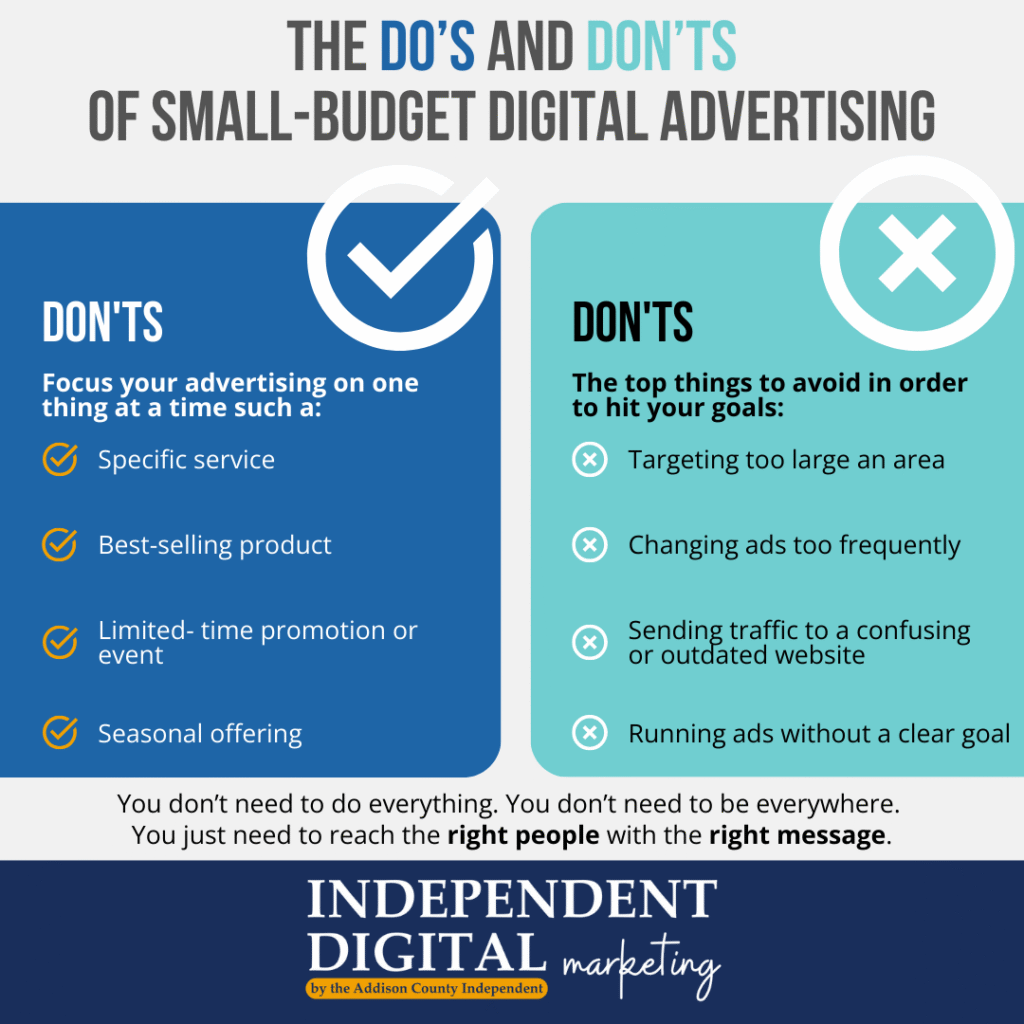
- Targeting too large an area
- Changing ads too frequently
- Sending traffic to a confusing or outdated website
- Running ads without a clear goal
Digital advertising isn’t about perfection; it’s about steady improvement.
DIY vs Getting Help
Many small businesses can absolutely manage basic ads themselves, especially at the beginning.
It might be time to get help if:
- You’re spending money but seeing no results
- You don’t have time to monitor campaigns
- You want to scale what’s already working
A good local digital partner should help you clarify your goals, not pressure you into spending.
Final Thoughts
Small-budget digital advertising can work, especially in Vermont, when it’s focused, local, and consistent.
You don’t need to do everything. You don’t need to be everywhere. You just need to reach the right people with the right message.
And if you ever want a second set of eyes on your strategy or a new website that shows potential customers who you really are, that’s exactly what Independent Digital Marketing is here for. Contact us today!